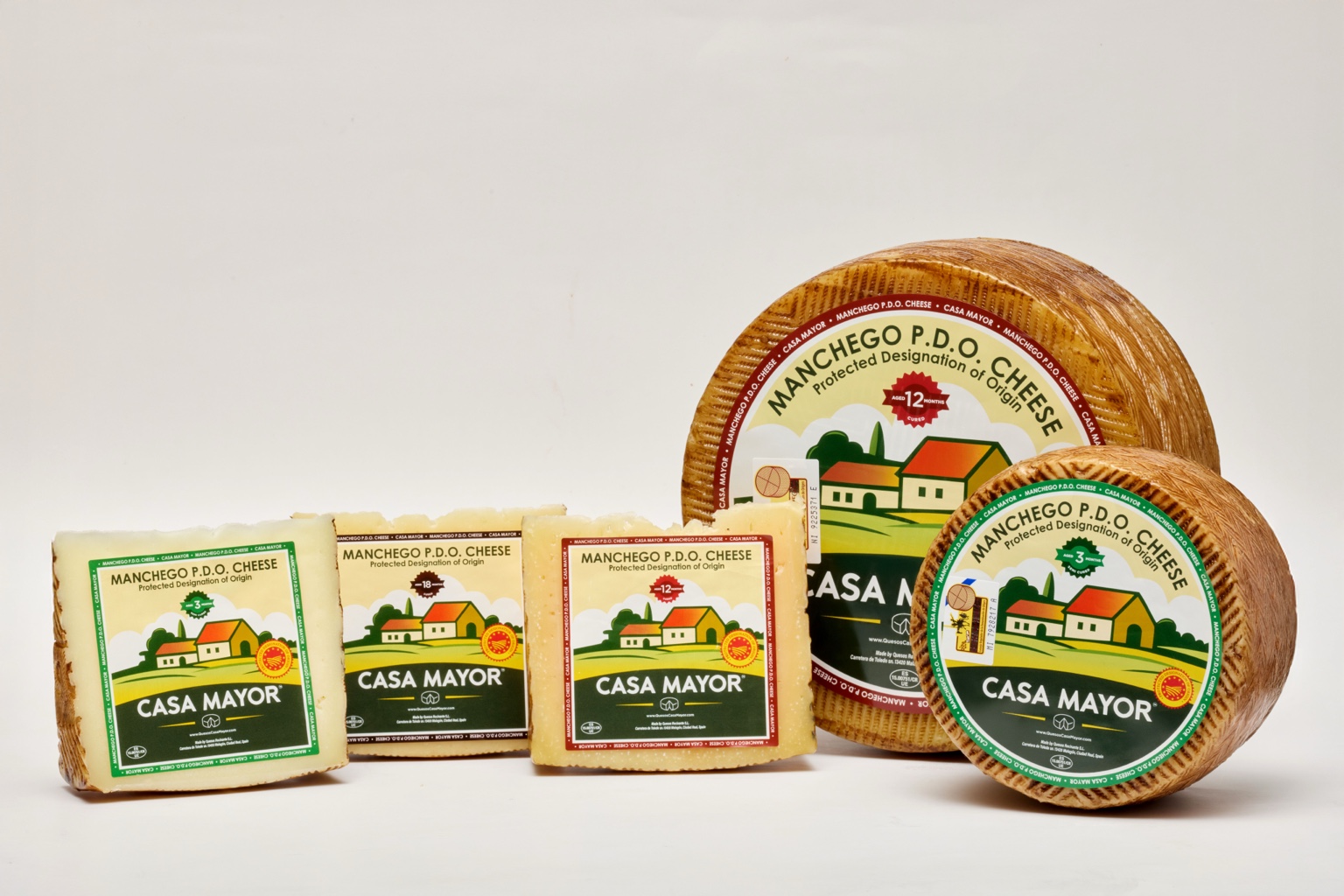
Manchego: a cheese with a protected identity
Manchego is a traditional Spanish cheese produced in the designated La Mancha region from milk of Manchega sheep. Its Protected Designation of Origin (P.D.O.; D.O.P. in Spanish) establishes requirements for where and how it is made. The name describes a specific protected cheese, not a general style of Spanish cheese.
Where does Manchego come from?
The protected production area is located in specified municipalities of Albacete, Ciudad Real, Cuenca and Toledo in central Spain. La Mancha’s agricultural and pastoral traditions are closely connected with the cheese’s identity.
What milk is used in Manchego?
Authentic Manchego P.D.O. is made with Manchega sheep’s milk. It is not a cow’s milk cheese. Its milk is one of the defining requirements of the designation.
What does Manchego taste like?
Manchego commonly has a compact texture and a characteristic, pleasantly savory flavor. A younger cheese may taste relatively mild and buttery, while extended maturation generally makes the texture firmer and the flavor more pronounced.
Why does Manchego have a patterned rind?
The recognizable crosshatched pattern on the rind reflects the traditional imprint of woven molds. It is an iconic visual characteristic, but the pattern alone does not prove a cheese has protected-origin status.
THE MARK OF AUTHENTICITY
Look for the seal. Know it’s real.
Not every sheep’s milk cheese made in Spain is Manchego. Authentic Queso Manchego is protected by a Designation of Origin (D.O.P. in Spanish; PDO in English), which links the cheese to a defined region, a specific breed of sheep, and regulated production standards.
01The PDO emblem
Look for the European Union’s red-and-yellow Protected Designation of Origin symbol on the label or packaging. It identifies a product protected under the EU geographical indication scheme.
02The Manchego certification label
Genuine Manchego is identified by official certification and traceability labeling from the Consejo Regulador de la Denominación de Origen Queso Manchego. Check the label for the designation Queso Manchego and its identifying marks.
03The numbered casein plaque
On whole cheeses, a numbered casein plaque embedded in the rind provides an additional authenticity and traceability marker. It is a useful way to distinguish certified Manchego from lookalikes.
Buyer’s tipThe traditional woven rind pattern is distinctive, but the pattern alone is not proof. Check the official PDO identification and certification marks, especially when buying pre-cut wedges.
When you choose Casa Mayor Manchego, take a moment to inspect the label: the protected-origin markings help tell the story of the cheese inside.
How can I identify authentic Manchego?
Look for the P.D.O./D.O.P. designation and the official identification and traceability marks required by the regulatory system. Packaging and labeling provide more reliable evidence of origin than shape or rind pattern alone.
How should I serve it?
Slice Manchego into modest wedges and serve with bread, almonds, fresh fruit or quince paste. Taste different aging periods side by side to discover the changes that time can bring.