
01
STEP 01
MANCHEGA SHEEP’S MILK
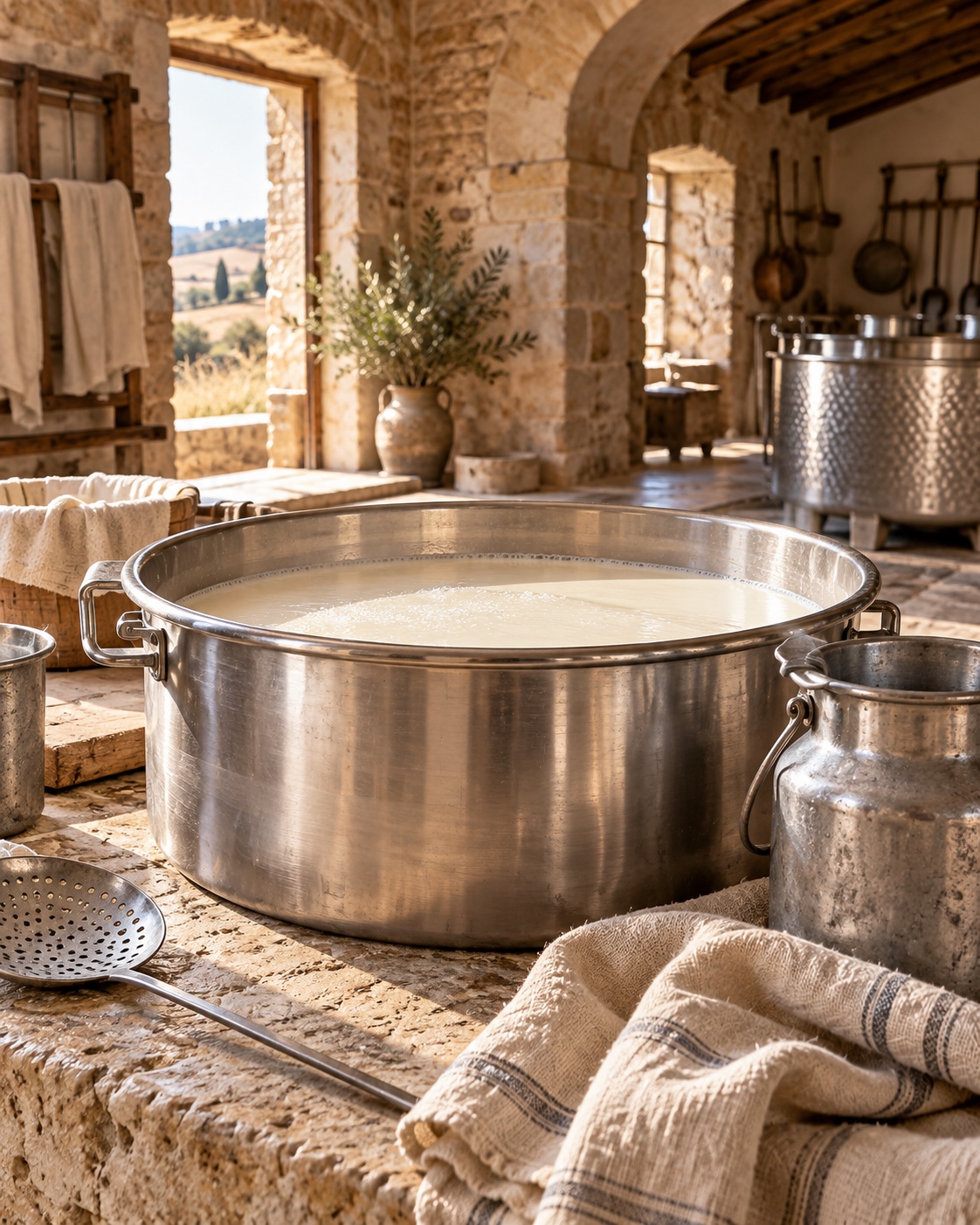
Authentic Manchego begins with milk from the Manchega breed, raised within the protected production area.
 CONTACT US
TRADITION, PATIENCE AND EXPERTISE IN EVERY WHEEL.
Authentic Manchego begins with milk from the Manchega breed, raised within the protected production area.
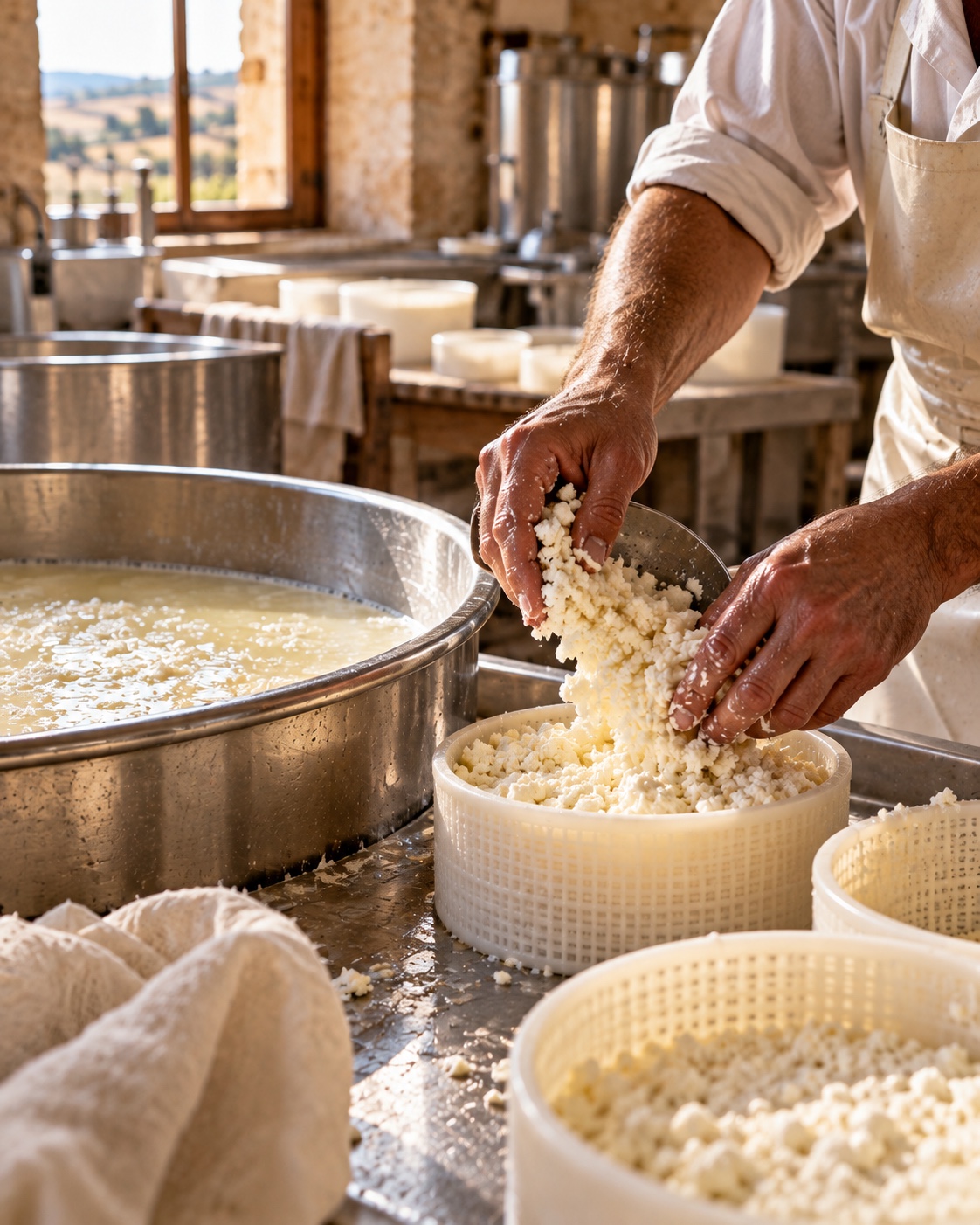
The milk is coagulated and the curd is cut, prepared and placed into molds to form the characteristic wheel.
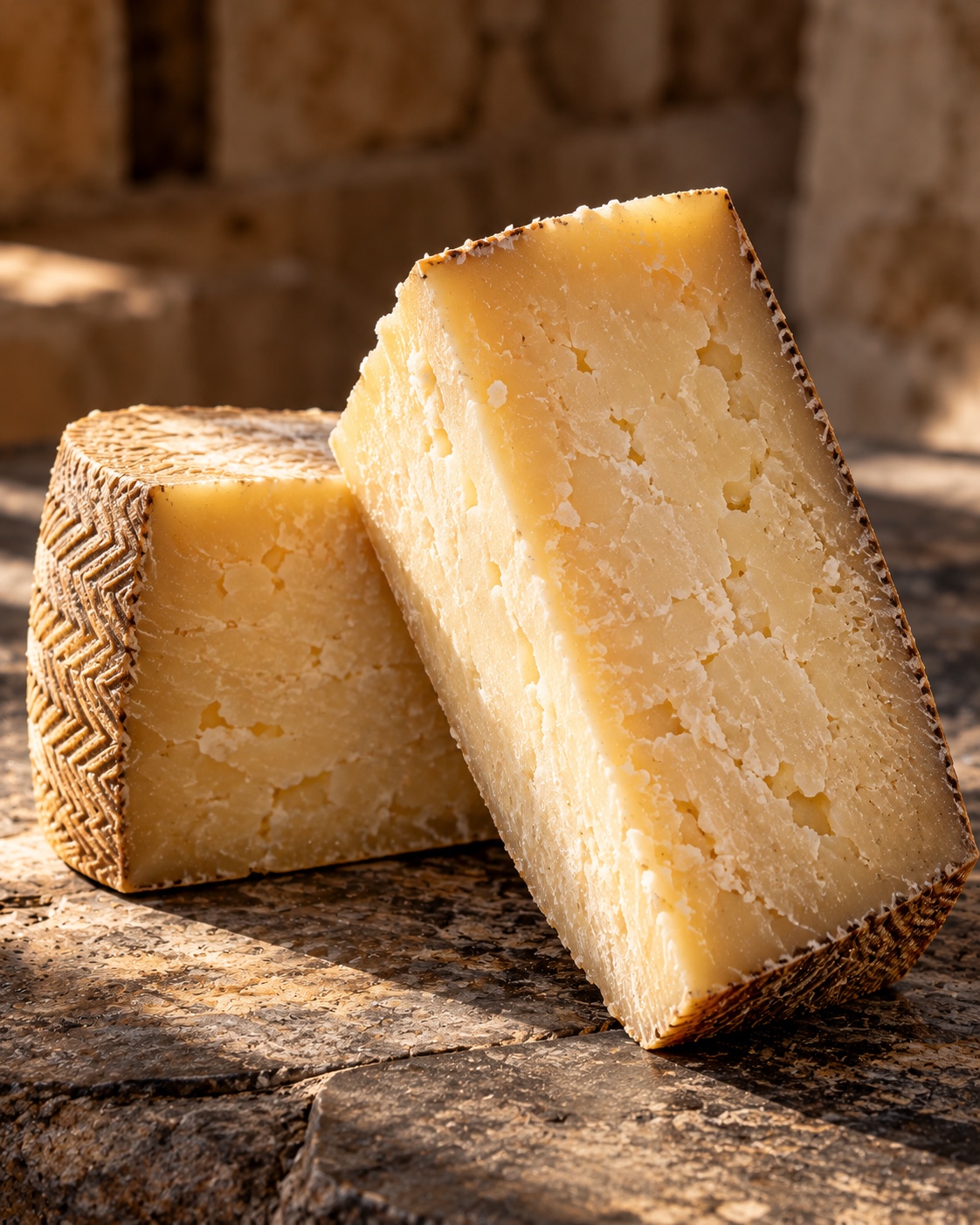
Each wheel is pressed and salted, essential stages that prepare the cheese for maturation.
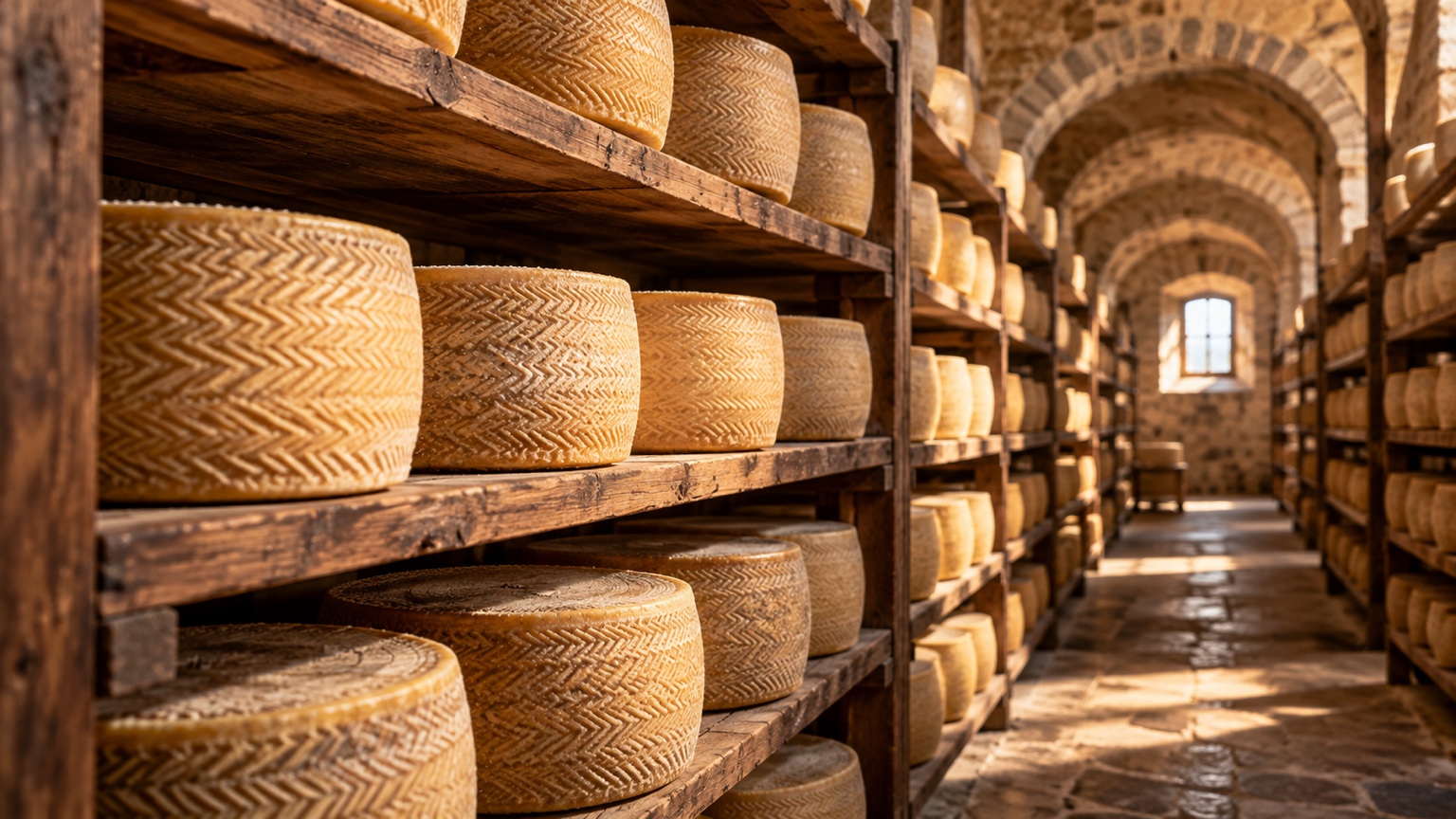
Controlled aging develops texture, aroma and depth. Time transforms milk into unmistakable Manchego.
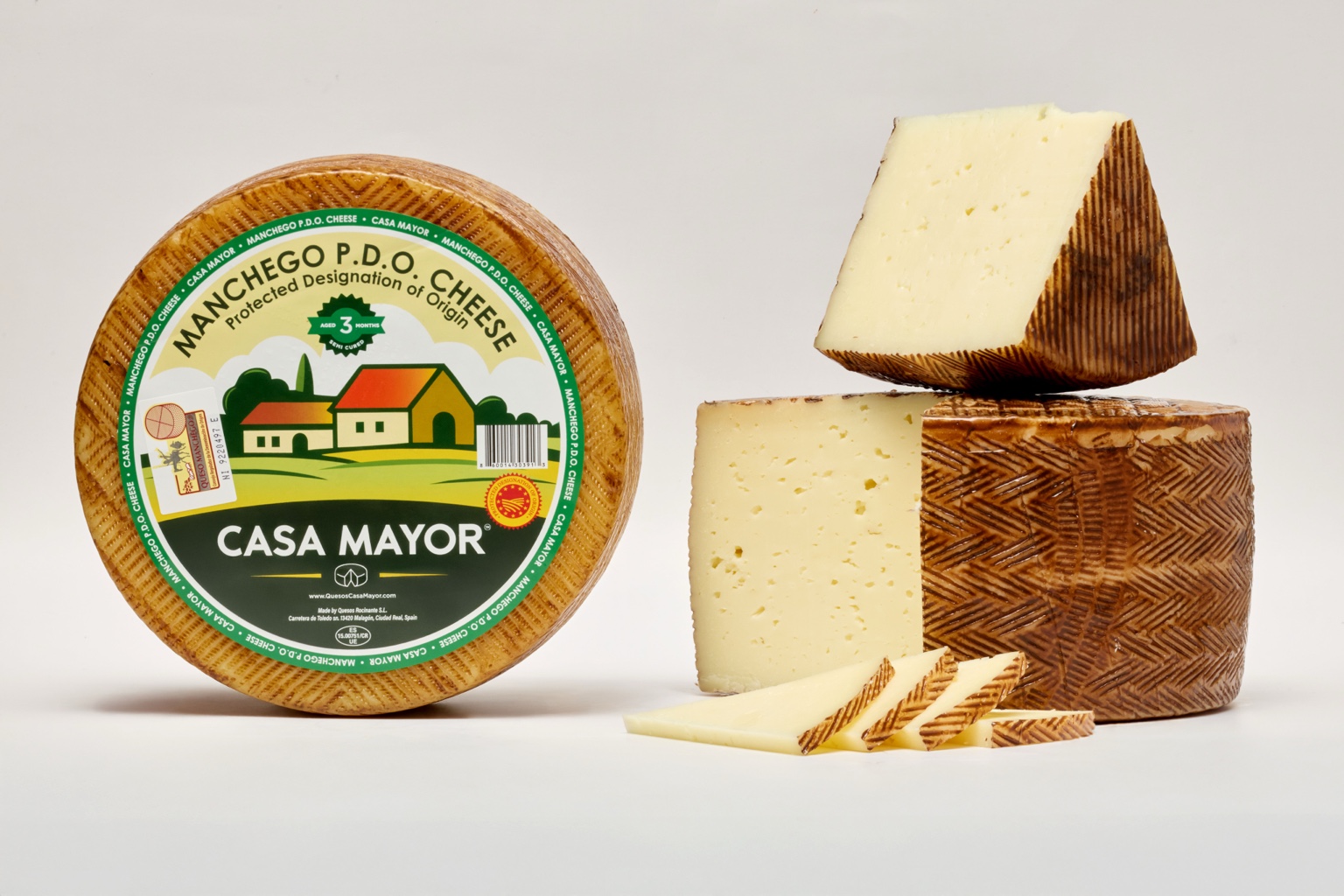
The Manchego P.D.O. designation safeguards the geographic and production requirements behind the name.
UNDERSTAND THE P.D.O.Authentic Manchego begins with the milk of Manchega sheep. The cheesemaker transforms the milk into curd, shapes and presses it, salts the cheese and allows it to mature under controlled conditions. The result reflects both its raw material and the passage of time.
Manchega sheep are adapted to the conditions of central Spain. The P.D.O. specification establishes the origin and composition requirements for authentic Manchego.
The basket-weave pattern associated with Manchego recalls traditional esparto-grass molds. Modern production may reproduce this characteristic design using approved molds.
During aging, moisture and texture change while flavor compounds develop. A longer-aged Manchego often feels firmer and tastes more concentrated than a younger one.
Look for the protected designation information and official identification marks on the cheese and its packaging. Learn more in our authentic Manchego guide.
Discover the craftsmanship behind every wheel.
EXPLORE OUR CHEESESThe finished cheese reflects milk quality, cheesemaking technique, careful handling and the time allowed for maturation.
Manchego PDO is made from the milk of Manchega sheep, a breed closely associated with the landscape and agricultural traditions of Castilla-La Mancha. This milk provides the foundation for the cheese’s distinctive richness.
During cheesemaking, the milk is coagulated and the curd is cut, worked and placed into molds. Pressing helps expel whey and form the characteristic wheel, while salting contributes to flavor and preservation.
The familiar basket-weave pattern around the side and flower-like pattern on the faces recall traditional molding methods. These recognizable surface details are part of Manchego’s visual heritage, although markings alone do not establish PDO authenticity.
Maturation gradually transforms texture and flavor. Conditions such as temperature, humidity and handling influence how the cheese develops. Compare the tasting characteristics of Casa Mayor’s four ages.
THE CASA MAYOR JOURNAL
Explore the origin, maturation and tasting traditions behind authentic Manchego PDO cheese.
Authentic Manchego PDO is made from the milk of Manchega sheep. Milk origin is central to the protected specification, distinguishing Manchego from other Spanish cheeses that may look similar but use different milk or come from other regions.
Cheesemaking transforms milk into curd, which is shaped, pressed and matured under controlled conditions. During aging, the cheese gradually changes in moisture, texture, aroma and taste. The exact result depends on production and maturation, not age alone.
The PDO system includes identification and traceability requirements. When selecting a whole wheel or a cut portion, check for the applicable certification information rather than relying only on the decorative rind pattern.
Authentic Manchego carries the protected designation and official traceability markings. The woven rind is a familiar characteristic, but the certification label and numbered casein plaque help distinguish genuine PDO cheese.